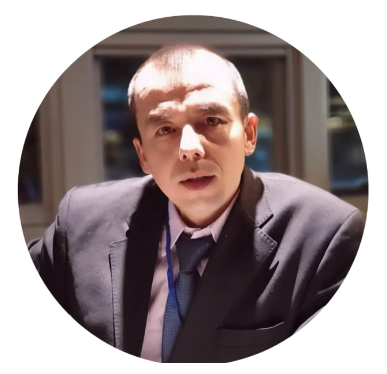
Dr. Mukhiddin Toshpulatov

Dr. Mukhiddin Toshpulatov

Assistant Professor, Researcher | AI & Deep Learning Specialist

Intelligent Network & Embedded Systems Lab, Computer Engineering Department, Gachon University
Seongnam, South Korea

193+ Citations
7 h-index
6+ Journal Papers
55+ GitHub Projects

About Me

I am a researcher working at the intersection of human–computer interaction and artificial intelligence, with a focus on translating fundamental advances in AI into practical, human‑centered systems. My research emphasizes multimodal sign language technologies, AI‑driven human interaction, human activity understanding, and generative models for accessible and natural human–machine communication.

I received my PhD in Smart Engineering from Inha University in 2025. My doctoral research, titled “Advancing Sign Language Recognition: A Multimodal Deep Learning Framework with Keypoint Vectorization,” developed scalable and interpretable multimodal learning approaches for sign language understanding. My work integrates deep learning, computer vision, and human–computer interaction to improve accessibility and inclusive AI systems.

I have held research appointments across several leading institutions. I am currently an Assistant Professor in the Department of Computer Engineering at Gachon University, where I lead research in the Intelligent Network & Embedded Systems Lab. In parallel, I serve as a Research Professor and Senior Researcher collaborating with the Voice AI Research Institute at Inha University, focusing on multimodal learning, Vision Transformers, diffusion models, and large language model–based agents. Previously, I was a Postdoctoral Researcher at KAIST’s SpaceTop Research Center (ITRC), where I contributed to vision‑based VR keyboard systems with an emphasis on precise fingertip contact detection and real‑time interaction.

In addition to my research activities, I have extensive teaching experience at universities in Korea and Uzbekistan, delivering undergraduate and graduate courses in deep learning, computer vision, cybersecurity, machine learning, numerical analysis, and mathematical modeling. My current research continues to explore multimodal perception, AI‑driven human–computer interaction, and generative models, with broader interests in deploying robust, interpretable, and human‑centered AI systems in real‑world environments.

``
Research Focus Areas

Sign Language Technologies

Real-time translation, cross-linguistic corpora, multimodal recognition systems, and sensor‑aware learning for accessible sign language communication.

Human Activity Recognition

Doppler-based sensing, privacy‑preserving activity analysis, skeleton‑based pose estimation, and healthcare-oriented motion understanding.

Generative AI

Diffusion and generative models for talking face synthesis, 3D facial animation, speech-to-face generation, and interactive virtual avatars.

AI-driven Human–Computer Interaction

Vision‑based hand and fingertip interaction, virtual keyboards, AR/VR/XR interfaces, smart glasses, and natural input modalities.

Multimodal NLP & Affective Computing

Multimodal emotion understanding, interpretable fusion of speech and language, and personalized emotion visualization for human-centered NLP interfaces.

Medical AI & Smart Healthcare

AI-driven medical image analysis, intelligent health monitoring systems, and multimodal learning for clinical decision support.

Key Technical Pillars

Social-Emotional NLP

Foundation: ACL 2026 (Findings)

Explainable multimodal speech emotion recognition (SER) using personalized preference learning and VAD-guided attention.

Multimodal Aware Fusion

Next Step: 2028 MSFT Strategic Project

Integrating Physical Awareness and Social Cognition for autonomous, empathetic human-robot interaction in unstructured environments.

Selected Publications

2026

Sentimentogram: Learning Personalized Emotion Visualizations from User Preferences

Toshpulatov, M., Lee, W., Lee, S., Kuvandikov, J., & Oh, S.

Findings of ACL 2026, pp. 185–187

2026

Adaptive Feature Refinement for Texture-Preserving Single Image Super-Resolution

Toshpulatov, M., Safarov, F., et al.

Cluster Computing (Springer US) IF: 4.2

2025

Hyperspectral Anomaly Detection with Enhanced Spectral Graph Transformer Network

Safarov, F., Toshpulatov, M., et al.

IEEE Access IF: 4.82

2025

Deep Learning Pathways for Automatic Sign Language Processing

Toshpulatov, M., Lee, W., & Lee, S.

Pattern Recognition, 164, 111475 IF: 9.84

2024

DDC3N: Doppler-Driven Convolutional 3D Network for Human Action Recognition

Toshpulatov, M., Lee, W., & Lee, S., et al.

IEEE Access IF: 4.82

2023

Talking Human Face Generation: Survey

Toshpulatov, M., Lee, W., & Lee, S.

Expert Systems with Applications, 219, 119678 IF: 9.29

2022

Human Pose, Hand, and Mesh Estimation Using Deep Learning: Survey

Toshpulatov, M., Lee, W., & Lee, S.

The Journal of Supercomputing, 78(6), 7616–7654 IF: 3.96

Education

2019 - 2025

Ph.D. in Smart Engineering

Biomedical Science & Engineering, Inha University, South Korea

Thesis: Advancing Sign Language Recognition: A Multimodal Deep Learning Framework with Keypoint Vectorization

2000 - 2002

M.Sc. in Mathematics and Computer Science

Samarkand State University, Uzbekistan

1996 - 2000

B.Sc. in Mathematics and Mechanics

Samarkand State University, Uzbekistan

Honors & Awards

Outstanding Researcher

Best Researcher Award, Inha University, 2025

Best Paper Awards

BigDAS and Korean Computer Congress, 2024

Excellent Paper Awards

BK21, BMSE Research Fair, Inha University, 2020-2023

Scientific Title "Docent"

Equivalent to Associate Professor, Supreme Attestation Commission of Uzbekistan, 2018

Technical Skills

Programming

Python MATLAB

Deep Learning

PyTorch TensorFlow Keras

Computer Vision

CNN Vision Transformers GANs Diffusion Models

Data Science

Pandas NumPy Scikit-learn

Languages

Uzbek (Native) Russian (Fluent) English (Fluent) Korean (Intermediate)

Get In Touch

Interested in collaboration, research opportunities, or have questions about my work? Feel free to reach out.

Email Me Contact Page